
Enlarging minds...
Sunday, 19 February 2017

Saturday, 4 February 2017
Want to get free Tv, Phone or lifetime free data
Hi friends your favorite blog infinite Techz is having a gift for its readers. On the wonderful ocassion of reaching 1000 subscribers and 1.2 million page views we want to celebrate it with you.
Infinite Techz is going to choose it's 10 lucky readers with highest points which can earn you a free TV phone or lifetime free data usage. So don't waste your precious time and start earning points to get reward. There are few rules and regulations you must follow to earn high:-
1. You have to total your points your self and comment below which will check your honesty.
2. Once you click the below given links then you will be redirected to YouTube and then you will have to watch full video.
3. If you cancel the video in between then you will not get your point.
4. Viewing each video will earn you 10 points.
5. If you share it with your friends then you will get bonus of 5 points.
So, check your luck and don't forget to be honest.
Click here to earn free points
Click here to earn points-2
Click here to earn points-3
Infinite Techz is going to choose it's 10 lucky readers with highest points which can earn you a free TV phone or lifetime free data usage. So don't waste your precious time and start earning points to get reward. There are few rules and regulations you must follow to earn high:-
1. You have to total your points your self and comment below which will check your honesty.
2. Once you click the below given links then you will be redirected to YouTube and then you will have to watch full video.
3. If you cancel the video in between then you will not get your point.
4. Viewing each video will earn you 10 points.
5. If you share it with your friends then you will get bonus of 5 points.
So, check your luck and don't forget to be honest.
Click here to earn free points
Click here to earn points-2
Click here to earn points-3
HIGHLIGHTS OF BUDGET 2017-18
HIGHLIGHTS OF BUDGET 2017-18
The Budget broadly focussed on 10 themes viz. farming sector, rural population, the youth, the poor to name a few.
The 2017 Union Budget, presented by Finance Minister Arun Jaitley on Wednesday, was broadly focused on 10 themes — the farming sector, the rural population, the youth, the poor and underprivileged health care, infrastructure, the financial sector for stronger institutions, speedy accountability, public services, prudent fiscal management and tax administration for the honest.
Following are the highlights of Mr. Jaitley's Budget speech:
Demonetisation
- Demonetisation is expected to have a transient impact on the economy.
- It will have a great impact on the economy and lives of people .
- Demonetisation is a bold and decisive measure that will lead to higher GDP growth.
- The effects of demonetisation will not spillover to the next fiscal.
Agriculture sector
- Sowing farmers should feel secure against natural calamities.
- A sum of Rs. 10 lakh crore is allocated as credit to farmers, with 60 days interest waiver.
- NABARD fund will be increased to Rs. 40,000 crore.
- Government will set up mini labs in Krishi Vigyan Kendras for soil testing.
- A dedicated micro irrigation fund will be set up for NABARD with Rs 5,000 crore initial corpus.
- Irrigation corpus increased from Rs 20,000 crore to Rs 40,000 crore.
- Dairy processing infrastructure fund wlll be initially created with a corpus of Rs. 2000 crore.
- Issuance of soil cards has gained momentum.
- A model law on contract farming will be prepared and shared with the States.
Rural population
- The government targets to bring 1 crore households out of poverty by 2019.
- During 2017-18, five lakh farm ponds will be be taken up under the MGNREGA.
- Over Rs 3 lakh crore will be spent for rural India. MGNREGA to double farmers' income.
- Will take steps to ensure participation of women in MGNREGA up to 55%.
- Space technology will be used in a big way to ensure MGNREGA works.
- The government proposes to complete 1 crore houses for those without homes.
- Will allocate Rs. 19,000 crore for Pradhan Mantri Gram Sadak Yojana in 2017-18.
- The country well on way to achieve 100% rural electrification by March 2018.
- Swachh Bharat mission has made tremendous progress; sanitation coverage has gone up from 42% in Oct 13 to 60% now.
For youth
- Will introduce a system of measuring annual learning outcomes and come out with an innovation fund for secondary education.
- Focus will be on 3,479 educationally-backward blocks.
- Colleges will be identified based on accreditation.
- Skill India mission was launched to maximise potential. Will set up 100 India International centres across the country.
- Courses on foreign languages will be introduced.
- Will take steps to create 5000 PG seats per annum.
For the poor and underprivilege health care
- Rs. 500 crore allocated for Mahila Shakthi Kendras.
- Under a nationwide scheme for pregnant women, Rs. 6000 will be transferred to each person.
- A sum of Rs. 1,84,632 crore allocated for women and children.
- Affordable housing will be given infrastructure status.
- Owing to surplus liquidity, banks have started reducing lending rates for housing.
- Elimination of tuberculosis by 2025 targeted.
- Health sub centres, numbering 1.5 lakh, willl be transformed into health wellness centres.
- Two AIIMS will be set up in Jharkhand and Gujarat.
- Will undertake structural transformation of the regulator framework for medical education.
- Allocation for Scheduled Castes is Rs. 52,393 crore
- Aadhaar-based smartcards will be issued to senior citizens to monitor health.
Infrastructure and railways
- A total allocation of Rs. 39,61,354 crore has been made for infrastructure.
- Total allocation for Railways is Rs. 1,31,000 crore.
- No service charge on tickets booked through IRCTC.
- Raksha coach with a corpus of Rs. 1 lakh crore for five years (for passenger safety).
- Unmanned level crossings will be eliminated by 2020.
- 3,500 km of railway lines to be commissioned this year up from 2,800 km last year.
- SMS-based ''clean my coach service'' is put in place.
- Coach mitra facility will be introduced to register all coach related complaints.
- By 2019 all trains will have bio-toilets.
- Five-hundred stations will be made differently-abled friendly.
- Railways to partner with logistics players for front-end and back-end solutions for select commodities.
- Railways will offer competitive ticket booking facility.
- Rs. 64,000 crore allocated for highways.
- High speed Internet to be allocated to 1,50,000 gram panchayats.
- New Metro rail policy will be announced with new modes of financing.
Energy sector
- A strategic policy for crude reserves will be set up.
- Rs. 1.26,000 crore received as energy production based investments.
- Trade infra export scheme will be launched 2017-18.
Financial sector
- FDI policy reforms - more than 90% of FDI inflows are now automated.
- Shares of Railway PSE like IRCTC will be listed on stock exchanges.
- Bill on resolution of financial firms will be introduced in this session of Parliament.
- Foreign Investment Promotion Board will be abolished.
- Revised mechanism to ensure time-bound listing of CPSEs.
- Computer emergency response team for financial sector will be formed.
- Pradhan Mantri Mudra Yojana lending target fixed at Rs 2.44 lakh crore for 2017-18.
- Digital India - BHIM app will unleash mobile phone revolution. The government will introduce two schemes to promote BHIM App - referral bonus for the users and cash back for the traders.
- Negotiable Instruments Act might be amended.
- DBT to LPG consumers , Chandigarh is kerosene-free, 84 government schemes are on the DBT platform.
- Head post office as the central office for rendering passport service.
- Easy online booking system for Army and other defence personnel.
- For big-time offences - including economic offenders fleeing India, the government will introduce legislative change or introduce law to confiscate the assets of these people within the country.
Fiscal situation
- Total expenditure is Rs. 21, 47,000 crore.
- Plan, non-plan expenditure to be abolished; focus will be on capital expenditure, which will be 25.4 %.
- Rs. 3,000 crore under the Department of Economic Affairs for implementing the Budget announcements.
- Expenditure for science and technology is Rs. 37,435 crore.
- Total resources transferred to States and Union Territories is Rs 4.11 lakh crore.
- Recommended 3% fiscal deficit for three years with a deviation of 0.5% of the GDP.
- Revenue deficit is 1.9 %
- Fiscal deficit of 2017-18 pegged at 3.2% of the GDP. Will remain committed to achieving 3% in the next year.
Funding of political parties
- The maximum amount of cash donation for a political party will be Rs. 2,000 from any one source.
- Political parties will be entitled to receive donations by cheque or digital mode from donors.
- An amendment is being proposed to the RBI Act to enable issuance of electoral bonds .A donor can purchase these bonds from banks or post offices through cheque or digital transactions. They can be redeemed only by registered political parties.
Defence sector
The defence sector gets an allocation of Rs. 2.74,114 crore.
Tax proposals
- India’s tax to GDP ratio is not favourable.
- Out of 13.14 lakh registered companies, only 5.97 lakh firms have filed returns for 2016-17.
- Proportion of direct tax to indirect tax is not optimal.
- Individuals numbering 1.95 crore showed an income between Rs. 2.5 lakh to Rs. 5 lakh.
- Out of 76 lakh individual assessees declaring income more than Rs. 5 lakh, 56 lakh are salaried.
- Only 1.72 lakh people showed income of more than Rs. 50 lakh a year.
- Between November 8 to December 30, deposits ranging from Rs. 2 lakh and Rs. 80 lakh were made in 1.09 crore accounts.
- Net tax revenue of 2013-14 was Rs. 11.38 lakh crore.
- Out of 76 lakh individual assessees declaring income more than Rs 5 lakh, 56 lakh are salaried.
- 1.95 crore individuals showed income between Rs. 2.5 lakh to Rs. 5 lakh.
- Rate of growth of advance tax in Personal I-T is 34.8% in the last three quarters of this financial year.
- Holding period for long term capital gain lowered to two years
- Proposal to have a carry-forward of MAT for 15 years.
- Capital gains tax to be exempted for persons holding land from which land was pooled for creation of the state capital of Andhra Pradesh.
- Under the corporate tax, in order to make MSME companies more viable, there is a proposal to reduce tax for small companies with a turnover of up to Rs 50 crore to 25%. About 67 lakh companies fall in this category. Ninety-six % of companies to get this benefit.
- The government proposes to reduce basic customs duty for LNG to 2.5% from 5%.
- The Income Tax Act to be amended to ensure that no transaction above Rs 3 lakh is permitted in cash.
- The limit of cash donation by charitable trusts is reduced to Rs 2,000 from Rs 10,000.
- Net revenue loss in direct tax could be Rs. 20,000 crore.
Personal income tax
- Existing rate of tax for individuals between Rs. 2.5- Rs 5 lakh is reduced to 5% from 10%.
- All other categories of tax payers in subsequent brackets will get a benefit of Rs 12,500.
- Simple one page return for people with an annual income of Rs. 5 lakh other than business income.
- People filing I-T returns for the first time will not come under any government scrutiny.
- Ten % surcharge on individual income above Rs. 50 lakh and up to Rs 1 crore to make up for Rs 15,000 crore loss due to cut in personal I-T rate. 15 surcharge on individual income above Rs. 1 crore to remain.
Monday, 23 January 2017
Upgrading jio 4g limit to 10gb per day
Reliance Jio 4G upgrade offer with 10GB daily download limit is a hoax
IT 23 Jan. 2017 16:13
Don’t fall prey nasty tricks offering 10GB daily 4G data on your Reliance Jio connection.
Even before its commercial debut, Reliance Jio had been the talk of the town, especially for freebies such as unlimited high-speed 4G internet, unlimited local and national voice and calls and access to a range of content services. Things have changed since the commercial launch, with high-speed 4G limit first cut down to 4GB per day, and now to 1GB per day. With customers wanting more free data, it provides a great opportunity for cyber criminals are trying to take an advantage of the situation by tricking them to sign up for fake offers.
The latest scam doing the rounds on social media is a trick to get daily 10GB 4G limit on your Reliance Jio connection. But beware, its a hoax that potentially puts your data at risk. The trick involves visiting an unsecured website upgrade-jio4g.ml where you are required to select your state, enter your mobile number and email address, followed by downloading an app in the second step.
The problem here – the URL itself is a fake one. After putting all your details, it asks you to share with at least 10 friends and groups to upgrade Jio service, after which it will ask you to download an app. Even the bottom of the page has terms and conditions mentioning ‘Go4G is not affiliated with Reliance orJio in any way.’ Those falling prey to this hoax are not only putting their information at risk, but also sharing with friends and groups, and thus putting their data in danger too.
If you do a Google Search, there are tons of blogs that provide various tips and tricks – to speed up 4G data speed, access free internet without data plans, and much more. However, all these processes involve redirecting tounsecure proxy addresses and server ports, which also gives attackers an access to your phone and the data stored in it. Sure, these tips and tricks sound exciting, but we’d highly recommend our readers to stay away from such scams and also inform family and friends about the same.
As of now, Reliance Jio customers get to enjoy ‘Happy New Year Plan’ under which you get unlimited high-speed 4G internet data with a daily cap of 1GB. After the 1GB limit is exhausted, the speed is cut down to 128Kbps, and gets refreshed post mid-night. For those who want a top-up, they can recharge with Rs 51, to get 1GB data with one-day validity, or recharge with Rs 301 that offers 6GB data and validity of 28 days.
Voice and video calls remain free on Reliance Jio network, and users also get free 100 SMS daily. Customers also get an access to Reliance Jio suite of apps to watch Live TV, on-demand movies, stream music, read magazines and more. The validity of Reliance Jio ‘Happy New Year Offer’ ends on March 31 2017. However, recent reports suggest that Jio might extend the offer till June 30, 2017 or charge a nominal fee for the same services.
Sunday, 8 January 2017
Samsung launches J1 4G smartphone with VoLTE, S-bike mode in India
Samsung launches Galaxy J1 (4G) with VoLTE, S bike support and more in India; price, specifications
8 Jan. 2017 13:29
Samsung launches Galaxy J1 (4G) with VoLTE, S bike support and more in India; price, specifications
Leading smartphone-maker Samsung has launched new affordable 4G-mobile Galaxy J1 in India.
The Galaxy J1 (4G) was originally unveiled last year and was first released in Russia and later in Dubai. Now, it is now available in the country, with three Indian region-specific features—S bike, S Power planning and Ultra Data saving modes.
Also read: Metal-clad Nokia 6 Android phone officially launched and it's awesome; price, features and everything you need to know
Once S bike mode is turned on in the smartphone, it gets activated when a user starts riding a two-wheeler. If someone calls the Galaxy J1 owner, they will get an automatic reply saying the device user is on the road, and may be reachable later. If the caller wishes to convey some emergency news, they will be asked to press "1" to override the S bike mode, said the smartphone-maker.
Ultra Data saving mode compress web-pages, when they get loaded on the smartphone, so that less consumption in internet data. On the other hand, S Power planning mode helps in extending the battery life by curtailing apps, which continue to hog cell's resources in the background.
It also supports VoLTE (Voice-over-LTE), meaning Galaxy J1(4G) owners can subscribe to Reliance Jio service and enjoy unlimited data and other freebies of the Happy New Year offer till March 31, 2017.
As for as hardware is considered, the Galaxy J(4G) features 4.5-inch super AMOLED screen and comes with 1.3GHz quad-core processor, 1GB RAM, 8GB internal storage, 8MP primary camera, 2MP snapper on the front and a 2,050mAh battery.
Samsung's new phone is available for Rs. Rs. 6,890 and comes in black, gold and white colour options.
The Galaxy J1 (4G) will be competing with popular brands such as Xiaomi Redmi 3S series, Asus Zenfone 4.5 LTE and Moto E3 Power, among others.
Watch this space for latest news on Samsung phones.
Also read: Also read: Samsung set to unveil foldable flagship Galaxy X to take on Apple iPhone 8 series
Key specifications of Samsung Galaxy J1 (4G):
Model Samsung Galaxy J1 (4G)
Display 4.5-inch WVGA super AMOLED screen with 800x480p resolution
OS Android Marshmallow OS
Processor 1.3GHz quad-core processor
RAM 1GB
Storage 8GB, expandable up to 128GB
Camera Main: 8MP camera with LED flash, HD (720p) video recording, autofocusFront: 2MP camera with CMOS sensor, fixed focus
Battery 2,050mAh;
Internet Usage Time(3G) (Hours):Up to 9
Internet Usage Time(LTE) (Hours): Up to 10
Internet Usage Time(Wi-Fi) (Hours): Up to 11
Video Playback Time (Hours): Up to 14
Removable: Yes
Audio Playback Time (Hours): Up to 39
Talk Time (3G WCDMA) (Hours):Up to 12
Network LTE with VoLTE (Voice-over-LTE)
Add-ons Dual-SIM slot, S bike mode, Ultra Data Saving mode, S Power planning mode, Bluetooth v4.1, Wi-Fi (802.11 b/g/n), USB 2.0, 3.5mm audio jack, FM radio, GPS/GLONASS
Dimensions 132.6 x 69.3 x 8.9mm
Weight 131g
Colours Black, gold and white
Price Rs. 6,890
Nokia first smartphone launched Nokia 6 with price tag 16,599
Nokia's first android phone launched ,priced at 16,599..Read more details here..
8 Jan. 2017

Nokia claims that “it takes 55 minutes to machine a single Nokia 6 from a solid block of 6000 series aluminium.” To jog your memory slightly, the 6000 series aluminium was also used in Apple’s iPhone 6, which was infamous for its bendgate issue. However, Nokia does promise a “high-level” of structural quality. The phone is only 7.85mm thick, excluding the protruding camera.
The Nokia 6 has a 5.5-inch hybrid in-cell full HD display, which is protected by a layer of curved 2.5D Gorilla Glass 3. The display and the protection layer are further laminated together with a polariser layer – like the one used in sunglasses – which apparently offers better sunlight legibility.
Nokia 6 packs a Qualcomm Snapdragon 430 octa-core SoC and 4GB of RAM. It comes with 64GB of internal storage and support for microSD cards of up to 128GB storage capacity. It supports almost all the LTE bands, including Band 40. The Nokia 6 also includes a 3,000mAh battery, which – according to Nokia – offers a maximum standby time of 32 days, 3G talk time of 18 hours, and music playback time of 22 hours. As far as ports are concerned, the phone comes with a micro-USB port (USB 2.0 standard, which is disappointing) with support for USB OTG and a dedicated 3.5mm jack. The phone also comes with a smattering of sensors including a light sensor, proximity sensor, accelerometer (gravity sensor), electronic compass, gyroscope, front fingerprint sensor, and hall sensor.
There is a 16MP rear camera with an f/2 aperture and a 1µm sensor. The camera includes phase-detection autofocus (PDAF) and is supported by dual tone flash for low-light conditions. The front camera has an 8MP 1.12µm sensor with an f/2 aperture. There are two speakers on the top and the bottom edge of the Nokia 6, and the phone also supports the latest Dolby ATMOS .
Arto Nummela, CEO, HMD Global spoke about the phone’s launch, “The Nokia 6 is a result of listening to our consumers who desire a beautifully crafted handset with exceptional durability, entertainment and display features. Our ambition is to deliver a premium product, which meets consumer needs at every price point, in every market. We start today, with our premium, high quality Nokia 6; built to deliver a fantastic core user experience for Chinese consumers. We look forward to unveiling further products in the first half of this year.”
The Nokia 6 will debut exclusively on JD.com in early 2017 and it is priced at 1699 CNY (approximately Rs 16,700).
Are you as excited as we are about the Nokia 6? Or, are you disappointed that the phone is exclusive only to China? Do let us know in the comments section below.
Tuesday, 27 December 2016
Jiofi router vs. others
Why JioFi is the Router for All Your Broadband Needs
28Dec. 2016
Reliance Jio is a subsidiary of Reliance Industries Limited (RIL). Devised to function as an overall digital ecosystem, Reliance Jio offers a range of services including high-speed 4G data, voice and video calling, as well a range of premium applications. The telecom company, referred to as the world’s largest start-up, offers the advanced VoLTE (voice over LTE) technology feature. The company intends to support the government’s vision of creating a digital-enabled India through its varied digital services aimed at enhancing the lives of 1.2 billion Indians. Jio’s advanced ecosystem currently entails smart devices, applications, content platforms, and a range of 4G data plans available at affordable tariffs.
Reliance Jio’s devices
Reliance Jio’s collection of devices comprises an extensive range of LYF smart phones as well as portable Wi-Fi hotspot devices called JioFi. LYF smart phones are available at varying prices and complement Jio’s 4G services. Additionally, JioFi devices allow individuals to avail of quality wireless hotspot services on-the-go at affordable rates.
JioFi compared to other Wi-Fi routers
While other routers may pose connectivity issues, the portable broadband device by Reliance Digital, JioFi, allows you to connect multiple devices as well as stream or download content using Jio’s high-speed 4G network. The devices function as a portable Wi-Fi hotspot offering a minimum of 10 wireless connections and one USB connection.
JioFi devices allow you to connect numerous multi-media devices to it, and do much more.
The device offers convenient portability due to its light-weight sleek body
It allows you to make high-definition voice and video calls
It has an inbuilt 2300mAh battery that lasts up to six-hours when fully charged
It lets 2G and 3G smart phone users experience media-rich calls and messaging services with the help of Jio4GVoice app.
Advantages of a JioFi device
The biggest advantage of opting for a JioFi device is its portability. Unlike all traditional Wi-Fi routers, the JioFi hotspot device can be easily carried and used as desired. Although you may think that using a Jio SIM on your smart phone and turning it into a hotspot is a wise idea, you may want to reconsider it. Considering that phone batteries may be easily exhausted due to the heavy usage of data, a JioFi device can help avoid this. This 4G hotspot device also scores in terms of its ease of use. Due to its design, the device easily fits into your pocket and can be conveniently carried around.
Bonus features of JioFi
JioFi devices come with a host of additional features that help it surpass other Wi-Fi routers in terms of service and quality. If you download the Jio Join application, even non-4G users can enjoy Reliance Jio’s 4G network. You can create a personal hotspot for up to 31 connections with the help of the JioFi 2 device whereas other MiFi devices in the market allow only 10 connections. JioFi devices aid the convenient transfer of data. They let you download and store information on the device’s SD card and disseminate it to other users on the same network with the help of its Wi-Fi disk feature. The third feature is the Jio 4G hotspot’s ability to grant users access to the entire suite of Jio applications. You may watch movies on JioOnDemand, listen to the latest chartbusters with JioBeats, and skim through your favorite magazine on JioMags.
Presently, under Reliance Jio’s welcome offer, users can experience the network’s high speed data services, media-rich calling, and applications for free on an unlimited basis. JioFi routers help broaden this experience by truly revolutionizing the digital experience in India.
Free smartphones for rural and poor people by Modi
Free smartphone with free data, PM Modi's New Year gift for you
New Delhi: It is raining gifts. Now, the Narendra Modi government is going to gift you a smartphone with free data. The finance and telecom ministries have been asked to prepare a report for this scheme. Sources say that under the scheme 70 lakh smartphones will be distributed in the first phase.
The announcement is likely to be made in the budget to be presented in February. This scheme will be targeted at the rural areas, and possibly urban poor.
Funds for the scheme are likely to come from the Universal Service Obligation Fund(USOF). The telecom companies contribute 5% of their revenues to the USOF, which is meant to spread telecom and net connectivity in the rural areas. Between 2002 and 2014, Rs 66,000 crore were collected in the funds, and only Rs 25,000 crore were used.
The logic is that this move will give a push to digital transactions. Howver, it is being also seen as a move to garner votes in the forthcoming assembly elections.
Prime Minister Narendra Modi has taken the most bold decision ever, Yeah it is the Bold decision. But the question is it will help them politically or not. This can only be answered by keeping other parties interests in mind. Modi's ministers says that, they were also not aware of this move, and says this decision is only for the national interests. As the Modi himself says that he has served a tea which will only be beared by 'gaon ke log' not by 'shehari babu' . Earlier on 8th November when this decision was taken all the innocent indians were very excited and well satisfied by this but after the days of long ques and still daily new black money holders are being caught by income tax department. It is very ironical that a comman man standing in a que for 8 hours get a 2000 Rs note and the black money holders are getting 6 crores or even 100 crores, so the question is that from where they are getting these huge amount of new currency as the bank officials, even the RBI officials are involved in this black Métiers . So many comman man are getting angry due to this but this does not mean that the corruption is increasing by 10 times as said by Mr. Kejriwal. As it may be possible that whoever doing this are being caught and the ones who are trying to do will get frightened . After demonetization the stone Peters in kashmir have lost their jobs and Mr Geelani has called off to the 4 month long strikes. For all the problems in India! Who is responsible only and only Pakistan, their tourism motto is 'Its Beautiful It's Pakistan' as they are no more beautiful the same thing they are trying to do in India. For fake currency, for Terrorism, for Naxalist funding, for Kashmir issue, everything happening in India only Pakistan is responsible for it. So it is a major setback for them. By GST now on there will be no big property scams so it will be a great benefit for the farmers. P.M Modi is now saying about Cashless economy but in India there are only 20 crore smartphone users so how can 132 crore people will get stuff from market by not having smartphone. But in this direction the major achievement is that due to this the young people who knows Cashless transactions will know definitely do this earlier no one was doing this. After young ones the elder ones will also learn this. As these are only the long term benefits of demonetization so comman people of india will definitely going to satisfied by Modi Sir. For Modi government in the upcoming elections in five states the major challenge is U.P. as it is considered as mini India elections, in U.P demonetization will really help B.J.P , as the elections will be in February or April and after 31 December , the situation will get normal and ques will vanish and they have appropriate time for propagating their Rama and development poltics by praising these long term benefits of demonetization.
As far as, Gujarat , punjab , and Goa elections are considered B.J.P has competition with AAP only, but Mr. Arvind Kejriwal has a truly major setback due to demonetization as earlier he daily goes to different villages and does huge rallies but after demonetization , his rallies have been completely vanished, because the visitors in rallies are only paid in cash , they cannot be paid by paytm.
Now taking in consideration the GDP statistics currently it is near 6.2 as sure it will decrease but after these 50 days if the IT department will be active by the same pace then in long run the demonetization will be a major turning point for indian economy and GDP will definitely increase in 2-3 years
As far as the argument for 2000 Rs note the some economists are saying that it is only for temperely basis after the currency crunch is taken over it will also be removed from the market and on the other side till then more Cashless users will be there
So keeping the these points in mind the government may get some shocking results in near future but in long run if corporated by bank officials and Us(the whole co
Monday, 26 December 2016
New aadhar app for those without mobile phones
New Aadhaar app for those without mobile phones
Infinite Techz 26Dec.2016
New Aadhaar app for those without phones
Along with NPCI, the UIDAI is in the process of extending its Aadhaar-Enabled Payment System to the digital payments system. (Representative image)
Not surprisingly, in a country with very poor infrastructure, there are several well-known hurdles to increasing the pace of digital payments at the pace the demonetisation exercise demands. There is the woefully inadequate number of Point of Sale (PoS) devices required to swipe your debit and credit cards—as compared to the 3 crore such devices India needs based on, say, Brazil’s PoS-penetration levels, India has just 15 lakh. With just 350 million internet connections, of which 162 million are broadband, the lack of internet facilities is another big problem area. And, with just 250 million smart-phones, 350 million feature phones and 36% of households with no phones, there is a natural ceiling to digital payments being made through the telephone network.
Encouragingly, a host of innovative solutions are being found to address these bottlenecks and, subject to being able to market them effectively enough—this is no small task, it has to be recognised—this will facilitate India’s move towards a less-cash society despite the poor levels of physical infrastructure. So, for instance, PayTM came out with a solution that sought to substitute PoS machines with mobile phones—the user would key in the credit/debit card number onto the merchant’s mobile and then key in a one-time-password to authenticate the transaction; the solution was soon withdrawn as it was felt it wasn’t secure enough, but it is likely a more viable solution will be found soon to find an alternative to physical PoS machines. While the USSD solution on offer for mobile payments using feature phones is quite cumbersome, the National Payments Corporation of India (NPCI) is working on an easier solution to allow the 350 million feature-phone owners easier access to mobile phone payments.
That leaves 36% of the households without access to phones. Along with NPCI, the UIDAI is in the process of extending its Aadhaar-Enabled Payment System to the digital payments system. Right now, a low-priced biometric scanner is attached to a mobile phone and is used to authenticate a person’s identity against the Aadhaar database. This is widely used in ration shops in states like Andhra Pradesh and, when the Aadhaar is linked to a bank account, such micro-ATMs are used to disburse cash as well—in a village, typically, a kirana shop can be the centre for the micro-ATM and the shopkeeper can, after the authentication is done, hand out cash to individuals. What UIDAI and NPC have done is to extend this to digital payments—a buyer can, on a merchant’s mobile phone, just key in her Aadhaar number and bank name (not the account number), authenticate the ID through a fingerprint and the payment gets made. Such single-factor authentications are allowed by RBI up to a certain cash limit and, to that extent, this is a good solution for those who want to pay digitally but have no phones. Pilot studies are being carried out right now and UIDAI is confident of rolling this out commercially over the next few weeks. Over time, the solutions will get better, but the short point is that there is a battery of innovation being done in the mobile payments space and that can only be good news for India’s journey towards a less-cash economy.
Pls. Subscribe Our channel on YouTube
*₹ 500 Balance For Every Indian* Modiji Giving Free Balance. Click here https://m.youtube.com/watch?v=KFA8mojPwBE and please share it as much as possible.
*₹ 500 Balance For Every Indian* Modiji Giving Free Balance. Click here https://m.youtube.com/watch?v=KFA8mojPwBE and please share it as much as possible.
Sunday, 11 December 2016
THE REAL TRUTH OF PANDIT JAWAHARLAL NEHRU
THE REAL TRUTH OF PANDIT JAWAHARLAL NEHRU
The Nehru family starts with the Mughal man named Ghiyasuddin Ghazi. He was the City Kotwal i.e. police officer of Delhi prior to the uprising of 1857, under the Mughal rule. After capturing Delhi in 1857, in the year of the mutiny, the British were slaughtering all Mughals everywhere. The British made a thorough search and killed every Mughal so that there were no future claimant to the throne of Delhi. So, the man Ghiyasuddin Ghazi (the word means kafir-killer) adopted a Hindu name Gangadhar Nehru and thus saved his life by the subterfuge. Ghiyasuddin Ghazi apparently used to reside on the bank of a canal (or Nehr) near the Red Fort. Thus, he adopted the name ‘Nehru’ as the family name. The 13th volume of the “Encyclopedia of Indian War of Independence” (ISBN:81-261-3745-9) by M.K. Singh states it elaborately. The Government of India have been hiding this fact.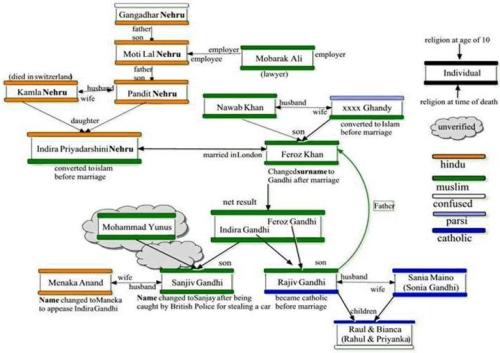
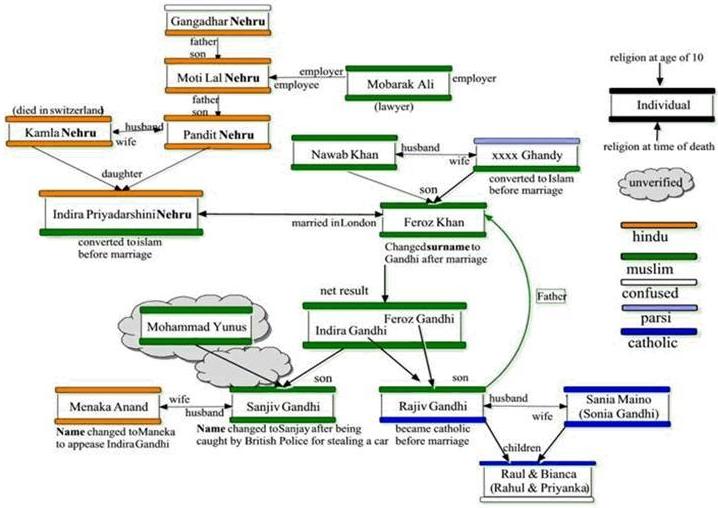
JAWAHAR LAL NEHRU:—Jawahar Lal’s father was Moti Lal and Moti Lal’s father was Gangadhar Nehru. His wife was kamala Kaul, who died in Switzerland of tuberculosis. M. O. Mathai in his book– “Reminiscences of the Nehru Age”– which opens secret of Jahawarlal Nehru relationship with a Beneras girl. His relationship with several teens , Nehru was a playboy type , drinking wine, smoking with Edwina Mountabattien & others secretly. 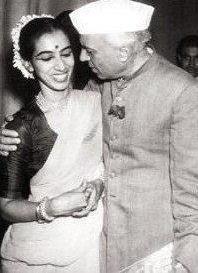

Nehru wrote letters to Edwina , after she left India, until her death. In his letters, Nehru often sought Edwina’s advice on matters of governance and strategy, according to British author Janet Morgan who was given access to the correspondence by the Mountbatten family. Morgan was given a small box weighing more than five pounds. The box contained all the letters Nehru wrote to Edwina between 1948 and 1960. A few of them even had a rose pressed between the pages.According to Morgan, in one of those letters, Pandit Nehru apparently wrote about the embarrassment VK Krishna 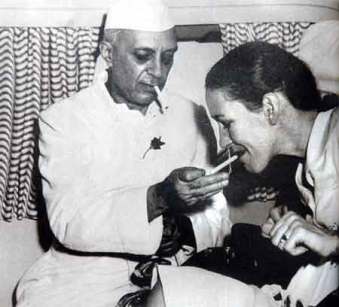 Menon, India’s first high commissioner to the Court of St. James, had become.Pamela Mountbatten, daughter of Lord Mountbatten and Edwina, in an interview to Karan Thapar on Devil’s Advocate on CNN-IBN news channel, said that the Edwina-Nehru relationship was also of use to her father. And that Lord Mountbatten often appealed to Panditji given the influence Edwina had; this was particularly useful while handling tricky situations like Kashmir.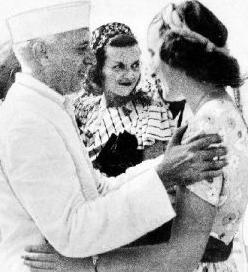
 Menon, India’s first high commissioner to the Court of St. James, had become.Pamela Mountbatten, daughter of Lord Mountbatten and Edwina, in an interview to Karan Thapar on Devil’s Advocate on CNN-IBN news channel, said that the Edwina-Nehru relationship was also of use to her father. And that Lord Mountbatten often appealed to Panditji given the influence Edwina had; this was particularly useful while handling tricky situations like Kashmir.
In a letter to his daughter, Patricia, Mountbatten wrote,“She and Jawaharlal are so sweet together, they really dote on each other in the nicest way and Pammy and I are doing everything we can to be tactful and help. Mummy has been incredibly sweet lately and we’ve been such a happy family.”
Years later daughter Pamela Mountbatten Hicks, talked to the BBC another mother’s relationship with Nehru:”It was a very very deep love that lasted for 12 years,” she said before refuting the rumour that they might have been lovers.”It was a really emotional
love . An affair one thinks of as physical. This was not…It was an amazing amazing friendship.”
Nehru wrote letters to Lady Mountbatten’s almost every day for the rest of her life. Lady Pamela Mountbatten Hicks , who read Nehru’s letters to her mother described them as “very tender”.
After Lady Mountbatten’s death in 1960, she was buried at sea. Prime Minister Nehru sent a frigate from the Indian Navy to attend her funeral and cast a wreath into the ocean on his behalf.
Years later daughter Pamela Mountbatten Hicks, talked to the BBC another mother’s relationship with Nehru:”It was a very very deep love that lasted for 12 years,” she said before refuting the rumour that they might have been lovers.”It was a really emotional
love . An affair one thinks of as physical. This was not…It was an amazing amazing friendship.”
Nehru wrote letters to Lady Mountbatten’s almost every day for the rest of her life. Lady Pamela Mountbatten Hicks , who read Nehru’s letters to her mother described them as “very tender”.
After Lady Mountbatten’s death in 1960, she was buried at sea. Prime Minister Nehru sent a frigate from the Indian Navy to attend her funeral and cast a wreath into the ocean on his behalf.

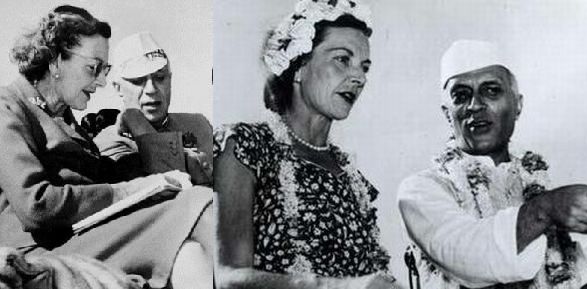
Also Nehru had love affair with Sarojini Naidu’s dans–ughter Padmaja Naidu, whom Nehru got appointed as the Governor of Bengal. It is revealed that he used to keep her portrait in his bed room, which Indira would often remove. It caused some tension between father and daughter.
Also Nehru had an affair with a sanyasin from Benares named Shraddha Mata in 1949, in a convent in Bangalore. A son was born and he was kept at a Christian Missionary Boarding School. His date of birth is estimated to be 30th May, 1949.
In 1929 Nehru father Motilal made a report , after that Muslims in India demanded new country.Then Jinnah who was in Congress Party was forced to join Muslim League.Nehru was so eager to take position of Prime Minister,created differences with Jinnah.Nehru even didn`t thought of poor people who died in civil war between Hindus Vs Muslims.
Nehru-Jinnah were responsible for division of India because wanted to be Prime Minister of India. In 1948 he foolishly gave Kashmir matter to United Nations without caring people.It was Sardar Vallavbhai patel who made India as a Republic merged Hyderabad & Junagadh. Netaji Subhash Chandra Bose and Dr. Shyama Prasad Mukherjee were competitors of Jawaharlal Nehru for the post of Prime Minister of India and both of them died under mysterious circumstances.
The Great calcutta Killings 1946 , Noakhali & Trippeli masscare— those days Nehru was spending his honeymoon with Edwina in shimla.
Nehru wanted to be the Prime Minister of India , so he blackmailed gandhiji that if he would not support him then would dissolved “Indian National Congress” & break India into 545 parts , that`s was the real plan of Britishers
Nehru wanted to be the Prime Minister of India , so he blackmailed gandhiji that if he would not support him then would dissolved “Indian National Congress” & break India into 545 parts , that`s was the real plan of Britishers
Gandhiji always said that Congress party should be dissolved after independence but Nehru gained this for his political ambitions.Gandhiji was in calcutta in 15th August,1947 when Nehru was celebrating independence day in Newdelhi.
He also refused to join UN offer of India`s permanent membership & gave this to China in 1950.
He was scared of truth, was trying to weak Indian Army. In 1961 he went to China & gave statement that Tibet is not a part of China but part of Indian occupied Tibet(Sikkim) is part of India , without boosting Indian Army, that brought China attack on India on 1962.
Government of India has not built a memorial of Jawaharlal Nehru at his birth place 77 Mirganj in Allahabad, because it is a brothel. The entire locality is a well known red light area since long. It has not become a brothel recently, but it has been a brothel even before Jawaharlal Nehru’s birth. A portion of the same house was sold by his father Motilal Nehru to a prostitute named Lali Jaan and it came to be known as “Imambada”. If you have some doubt, you may visit the place. Several dependable sources and also encyclopedia.com & Wikipedia say this. Motilal Nehru along with his family, later shifted to Anand Bhawan. Remember that Anand Bhawan is Jawaharlal Nehru’s ancestral house and not his birth place.
As per the book “The great divide: Muslim separatism and partition” (ISBN-13:9788121205917) by S.C. Bhatt— Jawaharlal Nehru’s sister Vijaya Lakshmi eloped with her father’s employee Syud Hussain. Then Motilal Nehru forcefully took her back and got her married with another man named Ranjit Pandit.
Jawaharlal Nehru’s second sister Krishna Hutheesing also mentions in her memoirs that her grandfather was the city Kotwal of Delhi prior to 1857’s uprising when Bahadur Shah Zafar was still the sultan of Delhi. Jawaharlal Nehru, in his autobiography, states that he have seen a picture of his grandfather which portrays him like a Mughal nobleman.The Urdu literature of the 19th century, especially the works of Khwaja Hasan Nizami, are full of the miseries that the Mughals and Mohammedans have to face then. They also describe how Mughals escaped to other cities to save their lives. In all probability, Jawahar Nehru’s Mughal grandfather and his family were among them.
Truth Of Amethi—-
After death of Raja(king) of Etawah (Uttap Pradesh) ,Rani (Queen) of Etawah wanted to save her kingdom beacuse she had no child. she asked Mobarak Ali and Motilal to fight her case. They asked her for Rs.500,000. The Rani paid in full. The case was lost in the lower court. They then told the Rani that they would fight the case in the higher court. They took another 500,000. The case was lost in the higher court also. They then told the Rani that they would fight the case in the Privy Council in London. They demanded up and down plane fare, a fat fee for themselves and a fee for a British advocate to fight the case in London. The smart British advocate said that the Rani could get hold of an infant of the appropriate age and say to the entire world that she was pregnant at the time of the Raja’s death. This idea worked and the Rani’s kingdom was saved.This stupid Rani thought that Mobarak Ali and Motilal had saved her. She gave them a lot of money and gave Amethi(uttar Pradesh),a part of her kingdom to Motilal. Ever since the members of the Nehru family have been behaving as if Amethi is their private property.
After death of Raja(king) of Etawah (Uttap Pradesh) ,Rani (Queen) of Etawah wanted to save her kingdom beacuse she had no child. she asked Mobarak Ali and Motilal to fight her case. They asked her for Rs.500,000. The Rani paid in full. The case was lost in the lower court. They then told the Rani that they would fight the case in the higher court. They took another 500,000. The case was lost in the higher court also. They then told the Rani that they would fight the case in the Privy Council in London. They demanded up and down plane fare, a fat fee for themselves and a fee for a British advocate to fight the case in London. The smart British advocate said that the Rani could get hold of an infant of the appropriate age and say to the entire world that she was pregnant at the time of the Raja’s death. This idea worked and the Rani’s kingdom was saved.This stupid Rani thought that Mobarak Ali and Motilal had saved her. She gave them a lot of money and gave Amethi(uttar Pradesh),a part of her kingdom to Motilal. Ever since the members of the Nehru family have been behaving as if Amethi is their private property.
******************************************************************************
INDIRA GANDHI:— Pridarshani Nehru (Indira Gandhi ) was admitted in Oxford University but driven out from there for non-performance. She was then admitted to Shantiniketan University but, Guru Dev Rabindranath Tagore chased her out for bad conduct.Jawaharlal Nehru only daughter was Pridarshani Nehru who later married to Feroz Khan ,was from the Junagadh area of Gujarat, a grocer supplied wines, etc. to Anand Bhavan, previously known as Ishrat Manzil, which once belonged to a lawyer named Mobarak Ali. Moti Lal Nehru was earlier an employee of Mobarak Ali. Feroze Khan, was then in England with pridarshani Gandhi , married in a London mosque. Feroze’s mother’s family name was Ghandy, often associated with Parsis and this was changed to Gandhi, sometime before his wedding with Indira Gandhi, by an affidavit.But Indira gandhi married to another man named Mohammad Yunus.After Rajiv’s birth Indira and Feroze lived separately, but they were not divorced. Indira Priyadarshini Nehru changed her name to Maimuna Begum.
INDIRA GANDHI:— Pridarshani Nehru (Indira Gandhi ) was admitted in Oxford University but driven out from there for non-performance. She was then admitted to Shantiniketan University but, Guru Dev Rabindranath Tagore chased her out for bad conduct.Jawaharlal Nehru only daughter was Pridarshani Nehru who later married to Feroz Khan ,was from the Junagadh area of Gujarat, a grocer supplied wines, etc. to Anand Bhavan, previously known as Ishrat Manzil, which once belonged to a lawyer named Mobarak Ali. Moti Lal Nehru was earlier an employee of Mobarak Ali. Feroze Khan, was then in England with pridarshani Gandhi , married in a London mosque. Feroze’s mother’s family name was Ghandy, often associated with Parsis and this was changed to Gandhi, sometime before his wedding with Indira Gandhi, by an affidavit.But Indira gandhi married to another man named Mohammad Yunus.After Rajiv’s birth Indira and Feroze lived separately, but they were not divorced. Indira Priyadarshini Nehru changed her name to Maimuna Begum.
The book “The Life of Indira Nehru Gandhi” (ISBN: 9780007259304) by Katherine Frank sheds light on some of Indira Gandhi’s other love affairs. It is written that Indira’s first love was with her German teacher at Shantiniketan. Later she had affair with M. O. Mathai (father’s secretary), then Dhirendra Brahmachari (her yoga teacher) and at last with Dinesh Singh (Foreign Minister).
Former Foreign Minister K Natwar Singh made an interesting revelation about Indira Gandhi’s affinity to the Mughals in his book “Profile and Letters” (ISBN: 8129102358). It states that- In 1968 Indira Gandhi as the Prime Minister of India went on an official visit to Afghanistan. Natwar Sing accompanied her as an IFS officer in duty. Indira Gandhi visit Babur’s burial place and told Singh “Today we have had our brush with history.” Worth to mention that Babur was the founder of Mughal rule in India, from which the Nehru-Gandhi dynasty have descended.
How Indira Gandhi favours Dhirubhai Ambani , in the book , banned in India– “The Polyester Prince”.
DOWNLOAD BOOK FROM HERE:– http://www.ziddu.com/download/6202617/DhirbhaiAmbani.rar.html
DOWNLOAD BOOK FROM HERE:– http://www.ziddu.com/download/6202617/DhirbhaiAmbani.rar.html
In 1971 Indira Gandhi gave support to “Muktiwahanisena” in East Pakistan, she also ignored 40 Lakh illegal immigrants in North-East, now in West Bengal illegal Bangladeshi are more than 2 crore. Link:– http://en.wikipedia.org/wiki/Illegal_immigration_in_India
She also released 90,000 Pakistani soldiers in 1971 war without taking Indian soldiers who were captured by Pakistani Army.
This kind of ignorance & neglence on North-East india creates extremism & militancy in India in 1980s.
She also failed to stop huge amount of corruption that brought 1977 revolution under J.P. Narayan, but she arrogantly made emergency in 1977.
(Link:– http://en.wikipedia.org/wiki/The_Emergency_(India) )
(Link:– http://en.wikipedia.org/wiki/The_Emergency_(India) )
It is a known fact that after Rajiv’s birth, Indira Gandhi and Feroze Gandhi lived separately, but they were not divorced. The book “The Nehru Dynasty” (ISBN 10:8186092005) by K. N. Rao states that the second son of Indira (or Mrs. Feroze Khan) known as Sanjay Gandhi was not the son of Feroze Gandhi. He was the son of another Muslim gentleman named Mohammad Yunus.
*************************************************************************************
SANJAY GANDHI:–Incidentally, Sanjay Gandhi(a playboy) marriage with the Sikh girl Menaka (modeled for Bombay Dyeing wearing just a towel) took place in Md. Yunus( showed unhappiness in his book– ‘Persons, Passions & Politics’) house in New Delhi.
*************************************************************************************
SANJAY GANDHI:–Incidentally, Sanjay Gandhi(a playboy) marriage with the Sikh girl Menaka (modeled for Bombay Dyeing wearing just a towel) took place in Md. Yunus( showed unhappiness in his book– ‘Persons, Passions & Politics’) house in New Delhi.
Interestingly Sanjay Gandhi’s marriage with the Sikh girl Menaka took place in Mohammad Yunus’ house in New Delhi. Apparently Yunus was unhappy with the marriage as he wanted to get him married with a Muslim girl of his choice. It was Mohammad Yunus who cried the most when Sanjay Gandhi died in plane crash. In Yunus’ book, “Persons, Passions & Politics” (ISBN-10: 0706910176) one can discover that baby Sanjay was circumcised following Islamic custom.
**************************************************************************************
RAJIV GANDHI:–-Rajiv Gandhi was son of Mohammad Yunus,changed his religion to become a Catholic to marry Sania Maino of Turin, Italy. Rajiv became Roberto. His daughter’s name is Bianca(priyanka) and son’s name is Raul(Rahul). he mislead people of India that he was a Mechanical Engineer but he not passes a single exam .He gave press conference in London after Prime Minister that he was a parsi but cremated as per vedic rites in full view of India’s public.
**************************************************************************************
RAJIV GANDHI:–-Rajiv Gandhi was son of Mohammad Yunus,changed his religion to become a Catholic to marry Sania Maino of Turin, Italy. Rajiv became Roberto. His daughter’s name is Bianca(priyanka) and son’s name is Raul(Rahul). he mislead people of India that he was a Mechanical Engineer but he not passes a single exam .He gave press conference in London after Prime Minister that he was a parsi but cremated as per vedic rites in full view of India’s public.
From 1962 to 1965, he was enrolled for a Mechanical Engineering course at Trinity College, Cambridge. But, he left Cambridge without a degree because, he could not pass exams. Next year in 1966, he joined Imperial College, London but, again left it without a degree.
When her mother Indira died in 1984 he has given full support to Congress supporters in Delhi to spread pogroms in Delhi , Gave huge amount of money, Liquors,Arms to Congressmen to spread violence against Sikhs only for vote-Bank politics, played with emotions of people.
In 1989 he also supported Ayodhya issue to gain Hindu Vote, later Congress Government ( P.V. Narshima Rao) ordered to demolish Babri Maszid.
In 1989 when Congress Government was in Centre & in Bhopal ,Rajiv Gandhi supported to flee Bhopal Gas Tragedy suspect Enron owner Quattorochi.
In 1990 he ordered Indian Army to do nothing against extremism , later terrorists killed thousands of Hindus in Kashmir , and 4 Lakh forced to migrate. Because at that time congress was in no mood to displease their vote-bank people & party .
RAHUL GANDHI-—- In 1992, Sonia Gandhi revived her citizenship of Italy under Article 17 of the Italian Citizenship Law. Under Italian law, Rahul and Priyanka are Italian citizens because Sonia was an Italian citizen when she gave birth to them. Rahul Gandhi’s Italian is better than his Hindi. Rahul Gandhi is an Italian citizen is relevant from the fact that on 27th September 2001 he was detained by the FBI at Boston airport, USA for traveling on an Italian passport. If a law is made in India that important posts like that of President and Prime Minister should not be held by a person of foreign origin, then Rahul Gandhi automatically disqualifies to contend for the post of Prime Minister.
After finishing school education, Rahul Gandhi got admission at the St. Stephens College in New Delhi, not on merit basis but on sports quota of rifle shooting. After a brief stay there in 1989-90, he did his BA from Rollins College, Florida in 1994. Just for doing BA one need not go to the US. The very next year, in 1995 he got M.Phil. degree from Trinity College, Cambridge.
On Dec 31, 2004, John M. Itty, a retired college professor in Alappuzha district of Kerala, contended that action should be taken against Rahul Gandhi and his girlfriend Juvenitta alias Veronica for staying together for three days at a resort in Kerela.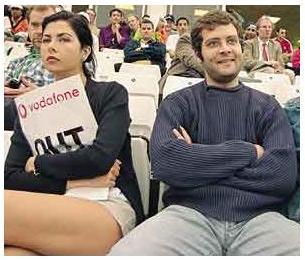
On Dec 31, 2004, John M. Itty, a retired college professor in Alappuzha district of Kerala, contended that action should be taken against Rahul Gandhi and his girlfriend Juvenitta alias Veronica for staying together for three days at a resort in Kerela.

On 3rd December 2006, Rahul Gandhi along with his foreigner friends gang raped then twenty four year old Sukanya Devi at a VIP Guest House in Amethi. She is the daughter of Balram Singh & Sumitra Devi of 23-12 Medical Choke, Sanjay Gandhi Marg, Amethi, Raebareli, Uttar Pradesh. Police refused to register complaint; the National Commission for Women headed by Dr. Girija Vyas acted as a Congress party office. The victim and her family is missing since then.
In 2008 during 26/11 when the whole country was tense about how to tackle the Mumbai terror, Rahul Gandhi was lavishly partying with his friends till 5 AM. Rahul Gandhi advises austerity for all Congress members. He says it is the duty of all politicians to be austere. On the other hand he has a ministerial bungalow with a fully equipped gym. He is a regular member of at least two of the Delhi’s poshest gyms, one of which is 5-star rated. Rahul Gandhi’s trip to Chennai in 2009 to campaign for austerity cost the party more than Rs 1 Crore. Such inconsistencies show that initiatives taken by Rahul Gandhi are not his own but, workout of his party men only.

Schweitzer Illustrierte, a Swiss news magazine,published on 19th November 1991, has alleged in an old issue that the Soviet intelligence agency KGB had deposited US $2.2 billion in a Swiss bank account in 1985 in the “minor” account of Rahul Gandhi managed by his mother Sonia Gandhi . Janata Party President Dr Subramanian Swamy, who had secured an order from the Delhi High Court to the CBI to investigate alleged receipt of slush money by late former Prime Minister Rajiv Gandhi’s family, has cited a November 1991 issue of the Swiss magazine in support of his charge.He has further claimed that the payments were authorized by CPSU by a resolution CPSU/CC/No 11228/3 dated 20/12/1985 and the same was also endorsed by the USSR Council of Ministers in Directive No 2633/Rs dated 20/12/1985. He also claimed that these payments had been coming since 1971 as the payments received by Sonia Gandhi’s family “have been audited in CPSU/CC resolution No 11187/22 OP dated 10/12/1984
Subscribe to:
Posts (Atom)